
What is Data Recovery?
Data recovery is the process of retrieving lost, deleted, corrupted, or inaccessible data from storage devices such as hard disk drives (HDDs), solid-state drives (SSDs), USB flash drives, memory cards, RAID systems, mobile phones, and servers. The goal is to recover valuable files—including documents, photos, videos, emails, and databases—when they can no longer be accessed through normal means.
Why is Data Recovery Important?
Data is one of the most valuable assets for individuals and businesses. Losing important information can result in financial losses, operational downtime, legal issues, and emotional distress. Data recovery helps restore critical information, minimizing the impact of unexpected data loss.
Common Causes of Data Loss
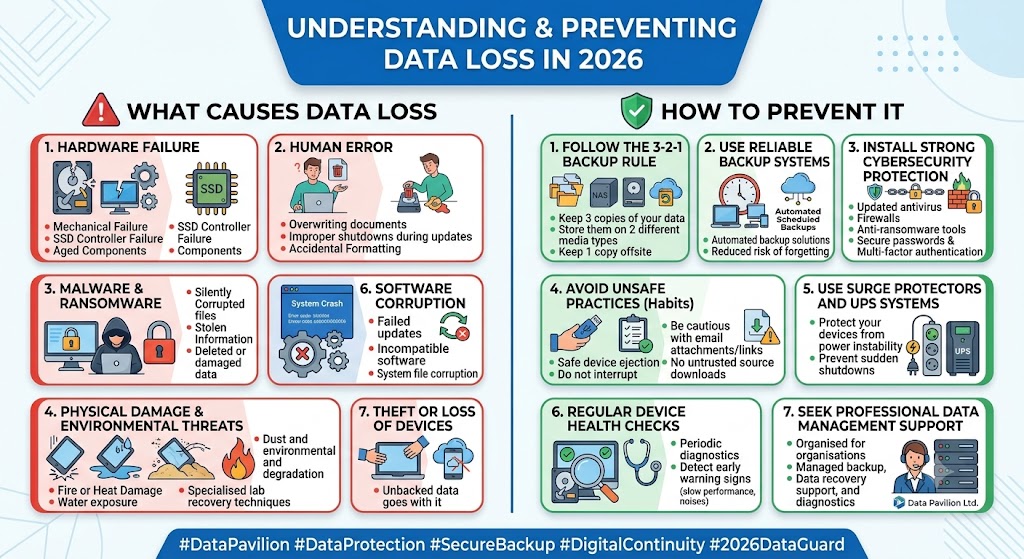
Data can be lost for several reasons, including:
- Accidental deletion of files
- Formatting of storage devices
- Hard drive or SSD failure
- Virus and ransomware attacks
- Power surges or unexpected shutdowns
- Water, fire, or physical damage
- Operating system crashes
- File system corruption
- Human error
Types of Data Recovery
1. Logical Data Recovery
This involves recovering data when the storage device is physically healthy but the data has become inaccessible due to software-related issues such as:
- Deleted files
- Formatted drives
- Corrupted partitions
- File system errors
- Virus infections
2. Physical Data Recovery
Physical recovery is required when the storage device has suffered hardware damage, such as:
- Failed read/write heads
- Damaged circuit boards (PCB)
- Motor failure
- Water or fire damage
- Impact damage from drops
This type of recovery requires specialized equipment and should only be performed by experienced data recovery professionals.
Devices That Can Be Recovered
Professional data recovery services can recover data from:
- Hard Disk Drives (HDD)
- Solid-State Drives (SSD)
- External Hard Drives
- USB Flash Drives
- Memory Cards (SD, microSD, CF)
- RAID Arrays
- NAS Devices
- Desktop and Laptop Computers
- Mobile Phones and Tablets
- Servers
The Data Recovery Process
A typical professional data recovery process includes:
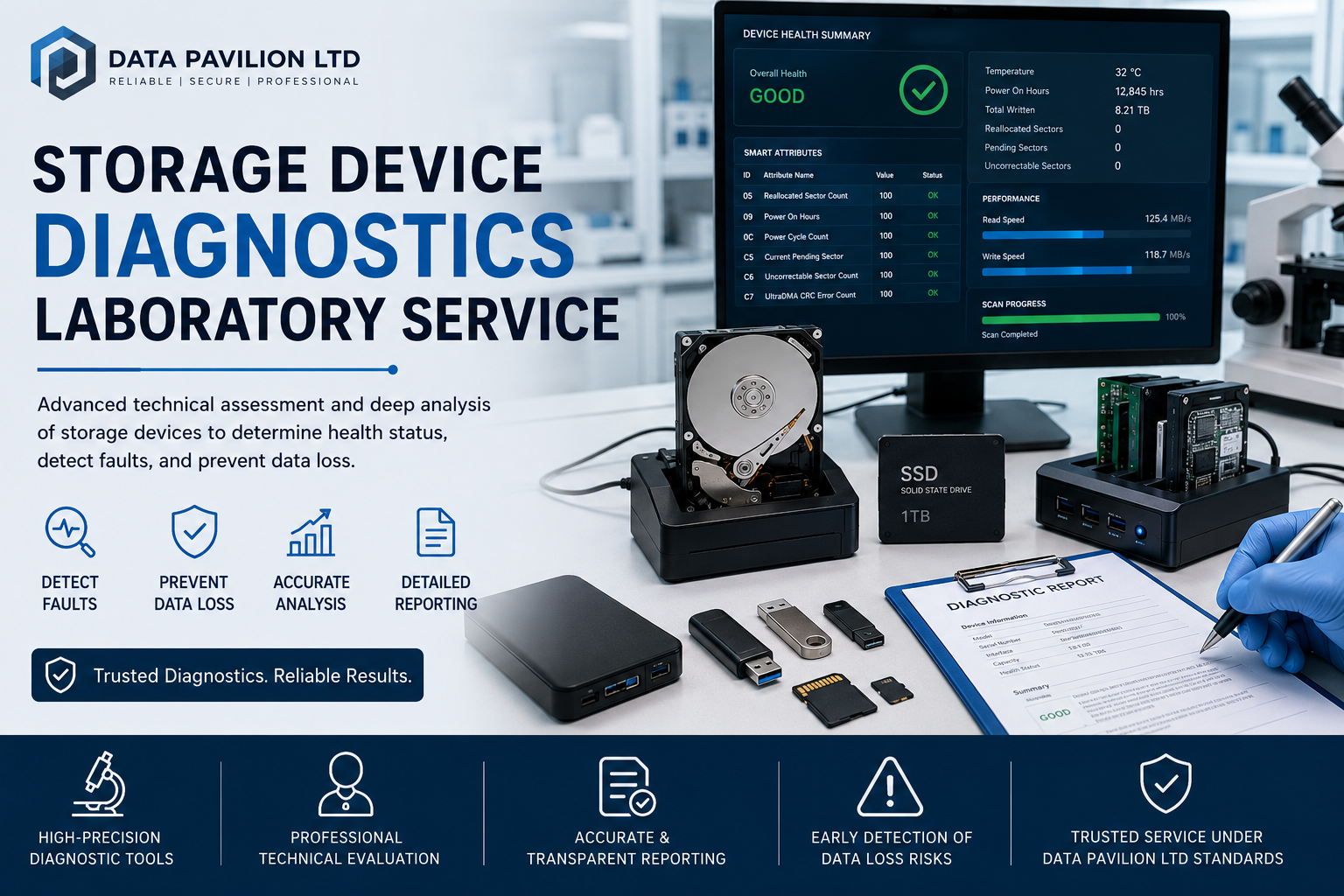
- Diagnosis – Assess the storage device and identify the cause of failure.
- Evaluation – Determine the best recovery method and estimate the recovery success rate.
- Recovery – Use specialized software or hardware techniques to retrieve the data.
- Verification – Check the recovered files to ensure they are complete and usable.
- Delivery – Return the recovered data on a new storage device or secure cloud storage.
Can Lost Data Always Be Recovered?
Not always. The success of data recovery depends on several factors, including:
- The cause of data loss
- The condition of the storage device
- Whether new data has overwritten the lost files
- The type of storage technology
- How quickly recovery is attempted after data loss
The sooner professional help is sought, the greater the likelihood of successful recovery.
How to Prevent Data Loss
While data recovery can often restore lost files, prevention is always the best strategy. Consider these best practices:
- Back up your data regularly.
- Use reliable cloud storage services.
- Install and update antivirus software.
- Protect devices with surge protectors or UPS systems.
- Avoid physically dropping or exposing storage devices to moisture.
- Monitor hard drive health and replace aging drives.
- Safely eject external storage devices before disconnecting them.
When Should You Contact a Professional?
You should seek professional data recovery services if:
- Your hard drive is clicking or making unusual noises.
- Your SSD or hard drive is no longer detected.
- Your files suddenly disappear.
- Your device has been exposed to water or fire.
- Your RAID or server has failed.
- Recovery software cannot access your data.
Avoid repeatedly powering on a failing drive, as this can worsen the damage and reduce the chances of successful recovery.
Finally
We are always there for you for your data recovery service. Reach us!